Everything must be taken in context. The field of 'World Literature' adheres to this especially, as otherwise it may be difficult to understand the peculiarities which are obscured by the universality of themes that pop up in literature time and again, tragedy, love, revenge, family etc.
It is with this stream of thought that I put down Lu Xun's short stories, which may be pretty unremarkable to the average reader who do not know about his involvement in the New Culture Movement in Republican China in the 1920s, or that he was the figurehead of China's new literary modernism. Furthermore, the political background of China at the time which had recently absolved itself from almost two millenia of imperial rule is of significance.
But it is evident, especially in his famous short story, "The Madman's Diary", about how this 'call to arms' - to face a new political landscape shaped by the people themselves - has been misconstrued and interpreted to suit the interests of various factionalised groups, such as the Communists. Instead of the status quo being right, it is in fact everyone else who is insane - it is a particularly seductive way of embracing the new, without really thinking about if there was anything to salvage from the old. The feudal system that supported imperial China was indeed parasitic and must be uprooted from Chinese society, once and for all.
Looking closer to these shores, Martin Amis' latest novel, "The Pregnant Widow" merits a deeper understanding of the English novel and how it has evolved. From his regular references to Jane Austen, to the protagonist's observation of social freedoms in the fashionable 60's London, Amis must be interpreted through a certain lens to be fully appreciated. Comical satire- of which I know little - exposes that very British type of humour, that perhaps foreign readers may not grasp, for example. And it is in this way, Amis tries to take an image of Britain's national psychology, up until the 2000s, where the old age of the main character sometimes clashes with the modernity of the new millenium.
But national understandings may not always be necessary, thankfully, but as with international relations, the nation always rears its ugly head in some shape or form, whether one would like it to be there or not.
Thursday, 31 March 2011


Friday, 25 March 2011
The White Ribbon
Patience is sometimes rewarding. It was difficult to become engrossed into this film at first, but as the film wore on, it was difficult not to become involved in this story of rural Germany just before WWI.
Other reviews have mentioned the 'quiet violence' and 'the socialization of rage' which the film depicts, but this film stands out in its subtlety. It is all too easy to be cynical about the present age, and idealize history in all its Mad Men-esque glamour and glory.
But this film is not just a forewarning of the nation-state-led violence which scarred the first half of the twentieth century; it really questions our own relationship with history and how susceptible our moral lens is to specks of dust that distort our perception of the big picture.
The White Ribbon is supposed to be a symbol of innocence and purity, but it is clear this obvious symbolism should be treated with more care. But despite the slogans and mission statements which we ourselves live by today, it is important to note how far society and humanity has learnt from its mistakes and strives to progress even further, even if that path is not always a smooth one.
Notwithstanding the cold, concrete figures of economics or legal-political structures that all-too-often dominate our lives, the arts remind us of what life is all about - curiosity, learning and connecting with others.
Other reviews have mentioned the 'quiet violence' and 'the socialization of rage' which the film depicts, but this film stands out in its subtlety. It is all too easy to be cynical about the present age, and idealize history in all its Mad Men-esque glamour and glory.
But this film is not just a forewarning of the nation-state-led violence which scarred the first half of the twentieth century; it really questions our own relationship with history and how susceptible our moral lens is to specks of dust that distort our perception of the big picture.
The White Ribbon is supposed to be a symbol of innocence and purity, but it is clear this obvious symbolism should be treated with more care. But despite the slogans and mission statements which we ourselves live by today, it is important to note how far society and humanity has learnt from its mistakes and strives to progress even further, even if that path is not always a smooth one.
Notwithstanding the cold, concrete figures of economics or legal-political structures that all-too-often dominate our lives, the arts remind us of what life is all about - curiosity, learning and connecting with others.
Sunday, 6 March 2011
When life gets in the way
Contemplation is healthy but not altogether always a very simple process. One's life becomes a diary full of dates and times and places to be. Tasks, to-do's, never wanting to waste those precious minutes. Efficiency, etc.
Similarly, you buy new things which are new and shiny, whereas the emotion-laden objects of old are swept away. You walk past the same set of photos everyday but never register the feeling, the eternity of that time when you took that photograph. Birthday cards, christmas cards are collected into a shoe-box to be hidden under your bed.
As one gets older, time seems to fly and hard work becomes more commonplace. You become more functional, robotic in the sense that sentiment hardly registers a heartbeat. In all this time, the clock is ticking away, with the seconds hand seemingly going slightly faster than you want it to. Salaries and mortgages - head down, getting on with the job.
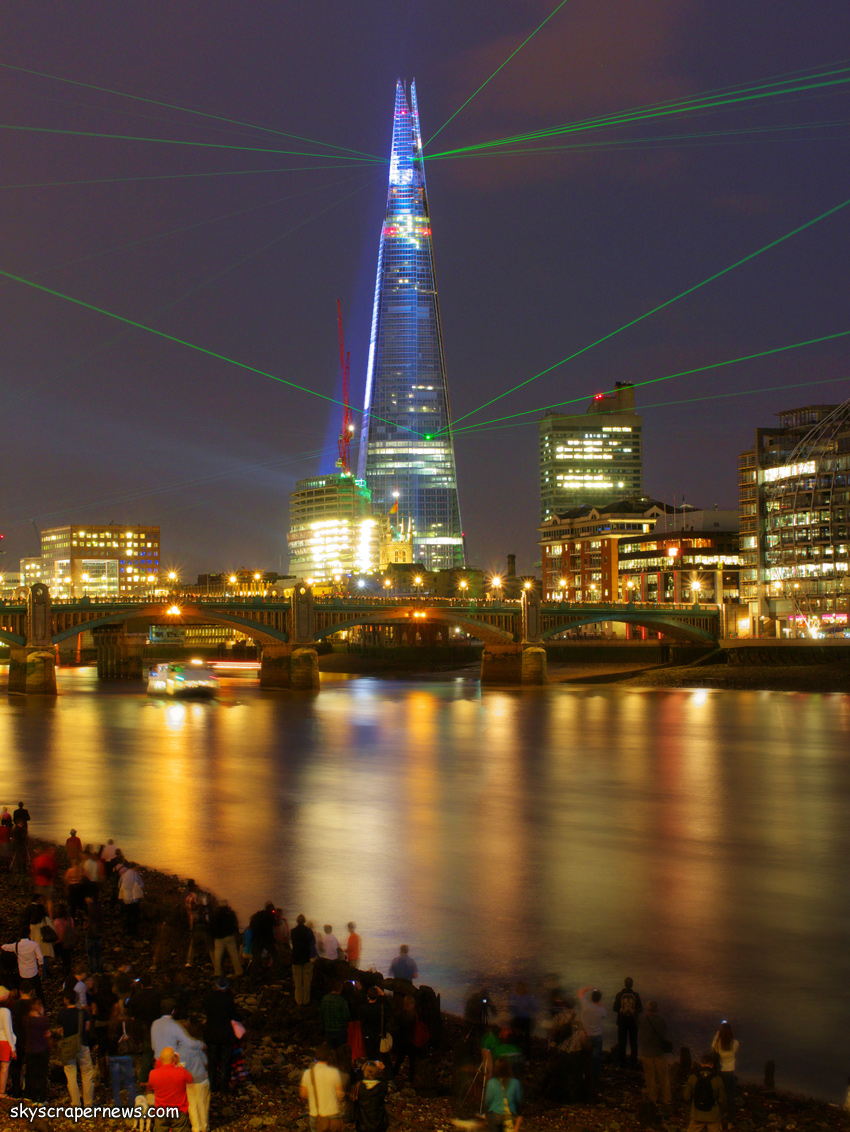 |
| The 'Shard': looking to an urban and technological future |
With the new orderliness of personal space and rigidness of professional time, one wishes they had time to write - to be more accurate, think and then write.
As an advocate of the thriving blogosphere, it is with a sort of melancholy that I look at blogs which haven't been updated at all recently. It reminds me of photos depicting the lost world of post-mining, post-industrial rust-belt regions in the U.S. Excited by opportunity and technology, a place (whether that be tangible or not) is infused with soul, and then it is abandoned.
Old and new memories, old and new objects, old and new experiences - these are indeed eternal struggles.
Subscribe to:
Posts (Atom)