 |
| Sartre: Said no to the coveted Nobel Prize |
Jean-Paul Sartre declined the 1964 Nobel Prize in Literature because he did not want to be "institutionalised".
From its beginnings in 1901, the Nobel Prize has come to be recognized as the pinnacle of any literary or academic career. No one during Alfred Nobel's lifetime had expected him to give the majority of his assets away to set up a foundation; he had, after all, made a fortune out of gunpowder. But his business prowess was balanced by a deep interest in the arts and sciences.
 |
| Alfred Nobel (born in Sweden, raised in St Petersburg, resided in France, the US, and Italy): inventor, entrepreneur, 'peace-lover' |
But perhaps what has been the most politically controversial award is the Nobel Peace Prize, which reflected Nobel's own aversion to war. The last two awards in 2009 and 2010 have received much media scrutiny in recent times - which leads me to pose the question: why should such a politicised award be so important?
Nobel's own reasoning may be that having furthered so greatly the progress of military technology, one would realize the devastating effect of weapons that war in the future would be impossible. But what of the award now?
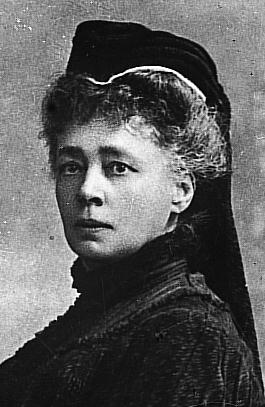 |
| Bertha von Suttner: heavily influenced Nobel's thoughts about the necessity for peace in the late 19th/early 20th century, a period fraught with the possibility of large-scale military conflict. |
Unlike the other Nobel awards, the Peace Prize is decided by just five members of a committee made up from former members of the Norwegian Parliament, despite all other awards being the responsbility of the Swedish Academy. Although the members are supposed to represent the broad spectrum spanning Norwegian politics, this is nonetheless a closed group - reflecting the uniquity of a nation outside the EU, with one of the highest standards of living in the world, the biggest public pension fund in the world, an oil/gas power, a key strategic power in Scandinavia, and one seemingly prominent in the study of global security. Although nominees are chosen by members of state, national courts, select academics, former winners, and other advisers, information about the nomination process (names of nominees, nominators, investigations, opinions) are, by statute, not disclosed for 50 years.
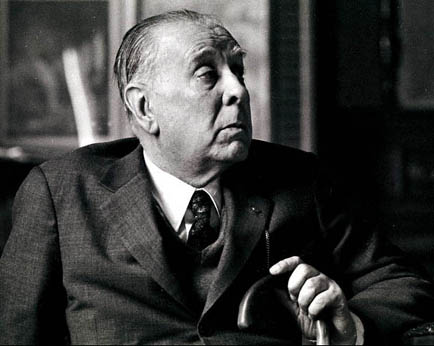 |
| Jose Luis Borges: the only blot on his illustrious CV was the Nobel Prize in Literature, which he very much coveted. |
One of the criticisms levelled at WikiLeaks at the moment is one which criticizes the focus being the US - and not more secretive states such as Iran, Israel, Saudi Arabia or China. But I wonder what they would find in the Nobel Foundation. How Jose Luis Borges did not fit the criteria of an author with 'idealistic tendencies'? Or an assumption that Barack Obama would be more decisive in the global arena in ensuring both traditional and newer forms of security?
See relevant links:
Alfred Nobel: Biographical Information
Nobelprize.org - Nomination and Selection of Peace Prize Laureates
BBC: What the Nobel storm says about changing world powers


No comments:
Post a Comment