 |
| Pirates have been around for donkey years (as long as Peter Pan at least) but the law still hasn't really caught up with them. |
This BBC article shows how difficult it has been to get international consensus on how to convict captured pirates. Which laws? Which jurisdictions? Which due processes? Without money, time and most importantly political will, the steps towards a trial and conviction will continue to be painfully slow.
Of course there must be impartiality before the law but the pirates have got major international powers into a political quandary. With the US, EU, China, Russia - among others - having a vested interest into the safe passage of cargo ships in the area and the criminal convictions of those thwarting this business, it will only be at the political level that any legal processes can actually work.
 |
| Lloyds' of London: where pirates get most of their hard-earned ransom money from. |
But this opens up a wider question on jurisprudence in the developed world. International law is comprehensive enough but by no means anywhere near pervasive or complete, and frequently relies on political nous to work at a practical level. Furthermore, when the laws of the developed West clashes with those in the less developed world - where talk of legal culture is much more widespread than law in its strictest sense - it can cause widespread problems. Observers of the wealthy Gulf states would know that 'petro-dollars' have a considerable influence as to how law in these countries is being developed. Borrowing bits of English and New York Law, commercial transactions laid forth by legal whizzkids have to skilfully skirt around the traditional condemnation of debt and interest in Islamic law and finance.
Whereas the West likes to think that it works by democratic consensus, institutionalised safeguards and with due process, it is struggling to understand how developing countries with astronomical growth rates could laugh at this rule-of-law 'drivel'. The Chinese especially have quite a different view on what the law means. Their Legalist school of thought is particularly revealing - which advocates for a common focus on strengthening the political power of the ruler, of which law is only one part. You won't see (m)any Chinese quoting from their Constitution which advocates freedom of speech or religion!
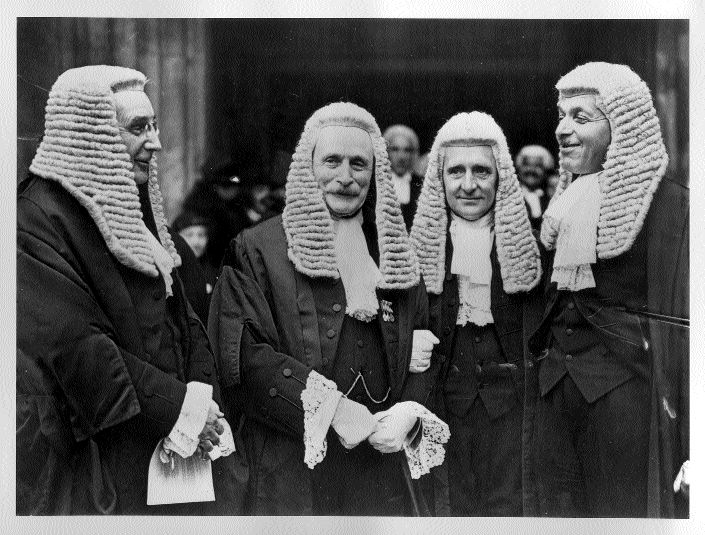 |
| It's not only wigs that makes the law as we know it look a bit ridiculous sometimes. |
Incidentally, I wonder what pirates think of the law? I'm not sure but they might be smiling like this:

See relevant links:
Wikipedia entry on the Chinese philosophy of Legalism


A very interesting post. There will always be people, I suppose, who manage to operate outside the law and make loads of money! This is particularly so, as you observe, when law and politics are so inextricably entwined.
ReplyDeleteThanks for visiting my blog. I found yours fascinating.